
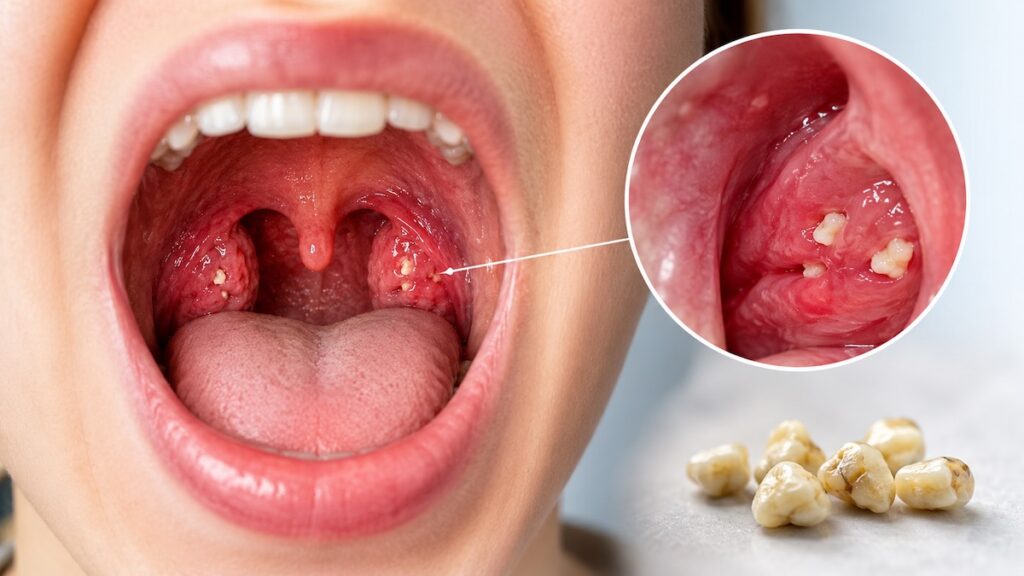
If you’ve noticed small, white chunks in your mouth, you might wonder where they come from. These mysterious formations might be tonsil stones, and you’re not alone in dealing with them. At Sundance Dental Clinic, we often see this concern during routine dental exams.
Tonsil stones are completely normal and affect millions of people regularly. While they can cause discomfort and embarrassment, they’re ultimately not concerning.
What Are Tonsil Stones & How Do They Form
Small Calcium Deposits in Your Tonsils
Tonsil stones are hardened collections of debris that form in the small pockets and crevices of your tonsils. Your tonsils have a naturally bumpy surface with tiny gaps where material can collect over time.
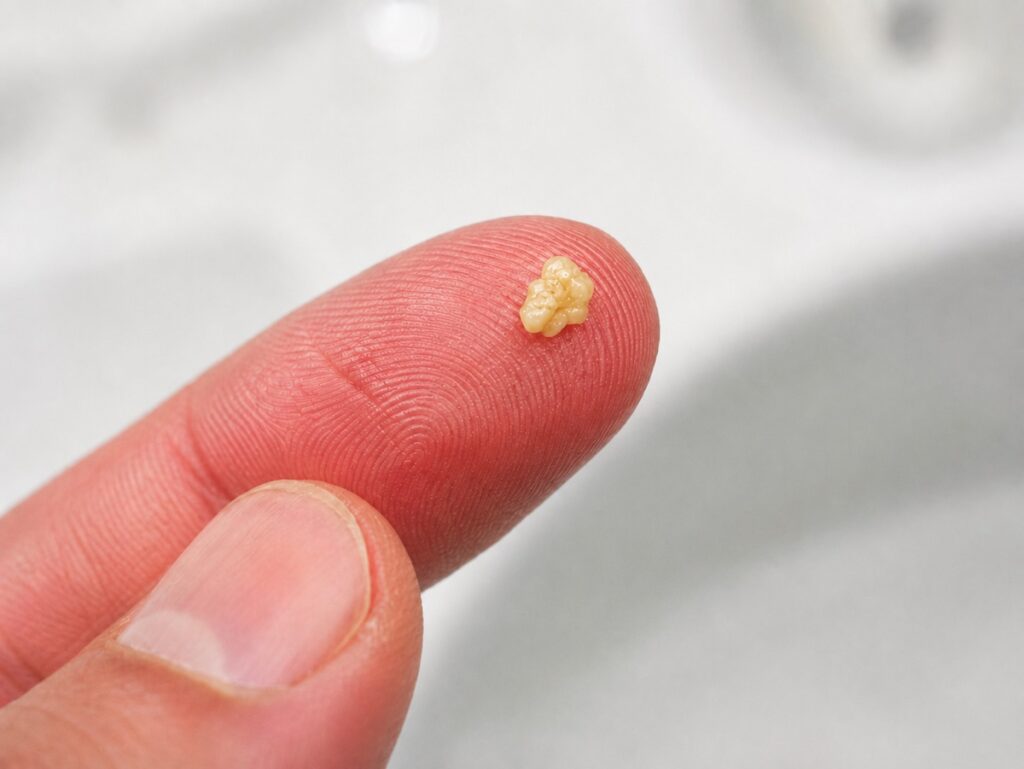
Tonsil stones start as soft accumulations that gradually harden into yellowish-white lumps. They can range from barely visible specks to larger formations that you can see when you open your mouth.
Common Causes of Tonsil Stone Formation
- Food particles getting trapped in tonsil crevices
- Bacteria buildup (such as from strep throat) creating an environment for stone formation
- Dead cells from your mouth and throat accumulating
- Poor oral hygiene allowing debris to remain longer
How Common Are Tonsil Stones
Some people experience tonsil stones occasionally, while others deal with them more regularly. Ultimately, they’re a common concern that we often see at our clinic.
Who Gets Tonsil Stones Most Often
Adults, particularly those between 20 and 40 years old, tend to develop tonsil stones more frequently than children. People with larger tonsils or deeper tonsil crevices face a higher likelihood of stone formation.
If you have a history of throat infections or chronic sinus issues, you might notice tonsil stones more often. The extra bacteria and debris from these conditions can contribute to development.
Signs You Might Have Tonsil Stones
Physical Symptoms to Watch For
- Bad breath that doesn’t go away despite brushing
- Sore throat or throat irritation
- Difficulty swallowing or feeling like something’s stuck
- White or yellow spots visible on your tonsils
- Ear pain that seems connected to your throat
When You Can See Them
Sometimes, you can spot tonsil stones when looking in the mirror with your mouth open wide. They appear as small, pale bumps on the surface of your tonsils or tucked into the folds.
You might accidentally dislodge them while brushing your teeth or gargling. When this happens, you’ll notice small, foul-smelling chunks that feel somewhat soft but hold their shape.
Your Dentist’s Role in Tonsil Stone Care
How Calgary Teeth Cleaning Helps Prevent Stones
Regular professional cleanings remove the bacteria and plaque that can contribute to tonsil stone formation. Your dental team uses professional scaling to address plaque and tatar buildup in areas that are difficult to reach with home care alone.
During your cleaning appointment, your hygienist can spot early signs of tonsil stones and provide advice for prevention, so that you can maintain the overall health of your mouth and throat.
Professional Removal Options
While tonsil stones often resolve on their own, if yours are causing you problems, your dentist can recommend a solution. They can also evaluate whether your tonsil stones indicate any underlying issues that need attention.
Home Care & Prevention Tips
Daily Habits That Make a Difference
- Regular brushing and flossing to reduce bacteria in your mouth
- Tongue cleaning to remove debris
- Saltwater gargles to help dislodge particles and reduce bacteria
- Staying hydrated to keep your mouth moist and help wash away debris
Foods & Habits to Limit
Certain foods can increase your likelihood of developing tonsil stones. Dairy products sometimes contribute to thicker saliva and more debris buildup, while sugary foods feed the bacteria in your mouth.
Smoking and alcohol use can dry out your mouth and create conditions that favour tonsil stone formation. Reducing these habits can help keep your mouth healthier overall.
Check in with Your Dentist
If you’re dealing with persistent tonsil stones or want to learn more about prevention, our team at Sundance Dental Clinic can provide personalized guidance during your next teeth cleaning appointment. Contact us today to request an appointment and take control of your oral health.