Brushing every day but still not feeling fresh? Find out how an old toothbrush could be holding your smile back—and when to grab a new one.
Your toothbrush is something you use every day without thinking twice, morning and night, it’s always part of the routine. But even your most reliable tool needs to be replaced regularly to keep your mouth clean and healthy. Over time, your toothbrush becomes less effective, which is why knowing when to switch to a new one is a simple yet important habit for your health.
Following a consistent schedule can help you get the most from your daily brushing. Most people should replace their toothbrush every 3 to 4 months — or sooner if the bristles look frayed, flattened, or discoloured. You should also start fresh after being sick. This simple routine helps your toothbrush do what it’s meant to: keep your teeth and gums clean between dental visits. This small step supports your efforts to maintain a clean and healthy mouth between professional dental cleanings.
The General Guideline for Your Toothbrush
The 3 to 4 Month Mark
You can set a simple reminder to change your toothbrush about every 3 to 4 months. This timeline helps you stay on a consistent schedule for your oral hygiene. It’s a small habit that supports your overall dental health by making sure your main cleaning tool is always in good shape.
Why This Timeline Matters
Toothbrush bristles wear down gradually, and once they lose their shape, they can’t clean as effectively, especially along the gumline and between teeth. Replacing your toothbrush regularly helps ensure every brushing actually does its job. Sticking to a replacement schedule helps you get the most out of your daily brushing routine and supports the benefits of professional hygiene appointments.
Key Signs You Need a New Toothbrush
Look at the Bristles
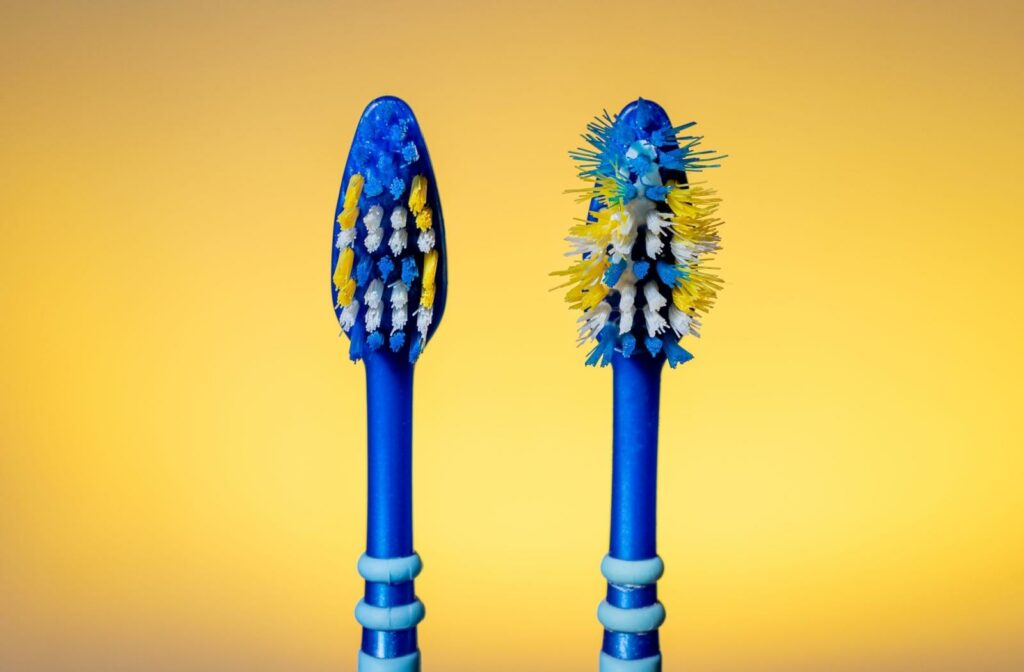
Your toothbrush bristles give you clear visual cues when it’s time for a replacement. A quick look can tell you if your brush is still in good shape. You don’t need to wait for the 3-month mark if you see these signs earlier.
Check for bristles that are:
- Frayed, splayed, or pointing in different directions
- Bent or matted down
- Noticeably discoloured
After an Illness
It’s a good practice to get a new toothbrush after you’ve recovered from a cold, the flu, or another illness. This is a simple, proactive step you can take for your peace of mind. A fresh start with a new brush is always a good idea.
Why Your Toothbrush Matters for Oral Health
Reduce Bacteria Buildup
Your toothbrush helps manage the bacteria that naturally live in your mouth. When it’s worn out, it can’t remove plaque as effectively, and that can affect your overall oral health.
Support an Effective Clean
The main job of your toothbrush is to remove food particles and plaque from tooth surfaces. When bristles lose their shape, their ability to clean thoroughly can decrease. A new toothbrush with firm, straight bristles can help you clean your teeth and along the gumline more effectively.
Protect Your Gums
Worn-out bristles can become stiff and may irritate your gums during brushing. A new toothbrush with soft bristles is designed to be gentle on your sensitive gum tissue. This helps make your brushing experience both comfortable and productive, protecting your gums as a key step in preventing gum disease.
A Fresh Brush & Your Dental Care Plan
Get More from Your Daily Routine
Using a toothbrush that is in good condition is a key part of your at-home oral health routine. It works together with a consistent daily flossing habit to help keep your smile healthy between professional appointments. This daily habit lays the foundation for your long-term dental wellness.
Support for Professional Treatments
Proper at-home care helps you maintain the results of your dental treatments. A new brush can help keep your smile bright after a teeth whitening procedure. It also helps you properly clean your teeth following a professional teeth cleaning.
Special Care for Dental Work
If you have dental work, a good toothbrush is important for maintenance. It helps keep the areas around veneers clean and supports gum health for those with dentures. For those using Invisalign, a clean toothbrush is also part of keeping both your natural teeth and aligners in great shape.
Your At-Home Care & Professional Visits
A Foundation of Good Habits
Small, consistent habits like changing your toothbrush create a strong foundation for your oral health. This simple action, combined with daily brushing and flossing, makes a significant difference. It’s an easy way to take an active role in your own dental care journey.
Questions for Your Dentist
You may have questions about the right type of toothbrush for you or your family members. Your dental team can offer personalized advice based on your specific needs and oral health. Feel free to ask us about brush types or techniques at your next appointment.
Schedule Your Next Dental Visit
Regular dental visits help keep your teeth clean, your gums healthy, and your smile bright. A professional cleaning removes buildup your toothbrush can’t reach and gives your dentist a chance to check in on your overall oral health.
Taking care of your toothbrush is a simple way to take care of your smile between visits. At Sundance Dental, we’re here to help you keep your teeth and gums healthy for years to come.
Book your next dental cleaning and stay on top of your oral health with our friendly team in Calgary.